koeme: Can we talk about your academic and professional experience first? How did you embark on the path of product design?
Zhang Fei: I was deeply attracted to the field of industrial design when I entered university, which is my favorite direction.
Recalling a class of 23 students in industrial design at university, less than 3 of them are still engaged in product design. I remember after graduating from college,
everyone was very confused. There were few job openings for industrial design majors in the market, and the vast majority of people changed their careers after graduation.
I am grateful that I later went to Zhejiang University Ningbo Institute of Technology to become an industrial design teacher, but in fact, at that time,
I had no real design experience except for some design rendering techniques. As a teacher myself, I began to interact with private enterprises in Ningbo,
which gradually made me an experienced designer in external design (during that time, I gained a deep understanding of production, molds, materials, and processes).
In 2004, I formed a design team called BELA DESIGN. In the following years, I have been designing products for various enterprises in Ningbo, and surprisingly,
my survival has also relied on design. Nearly 8 years after graduating from university
There are over 70 products designed and put into production, many of which are exported.
After years of providing design services, I sometimes feel helpless because I am only doing exterior design for enterprises.
Although I really want to know the user's feelings, I am separated by factories and layers of agents, and cannot know the user's true feelings.
I only know whether the sales situation of Party A is good (this is also obtained from Party A's mouth). In order to obtain more product feedback,
I have been following the first party company to participate in the Canton Fair almost every year, obtaining feedback on my own designed products from buyers.
In 2008, I moved back to Hangzhou from Ningbo (where my family was also established), and the normal way was to provide industrial design services
and product design for Zhejiang enterprises in Hangzhou. I don't know if it's because I'm tired or frustrated with this repetitive appearance design,
so I came up with the idea of making my own design product and putting it into production. So I formed a design team again and began my own path of original design.
We have been developing and designing an intelligent infusion monitoring system (new invention) from 2008 to 2011,
which has been used in hospitals such as Hangzhou and Shaoxing. We have multiple international invention patents for this system.
At the end of 2011, the network version of the infusion monitoring system entered a new stage, and the product officially entered a stable period.
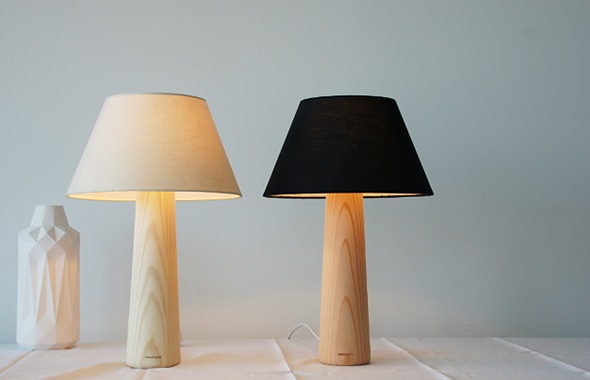
So I dared to free up time to design wooden products. Natural wood has always been a material that I really like.
I wanted to convey my feelings about natural wood to users through design, so I created the original design BELADESIGN furniture brand.
In the next few years, I will continue to inject time and energy into building this design brand.
koeme: What do you think is the happiest thing about being a teacher in your experience?
Zhang Fei: Actually, I have become accustomed to the days of being a teacher. Sometimes, I assign some thought-provoking designs to discuss with students,
which allows me to have a very quiet time for thinking. Business design has always kept oneself very busy, but in the classroom, one can find a feeling of slowing down.
Sometimes design needs to be slow, and I really like and enjoy this kind of slowness. I personally have a fondness for students,
and looking at these students reminds me of how I used to be in college. I am able to bring some of my design experience to students, and they love it.
I also love it myself. I have always told myself that if one day I am too busy and leave school, I will also ask myself to take design courses at different schools (but not too many classes).
koeme: Can we talk about the original design and the future of design?
Zhang Fei: I enjoy design and have been engaged in it for many years. I firmly believe in the value of design and we are doing something very important.
The future of design is definitely beautiful. I hope we can design more products to make users feel happy and convey more thoughts and emotions.
koeme: We have noticed that you have recently used traditional materials in your design products. In the context of contemporary design,
reinterpreting traditional culture seems to be a popular creative symbol. Can you elaborate on your concept of original ecology in design?
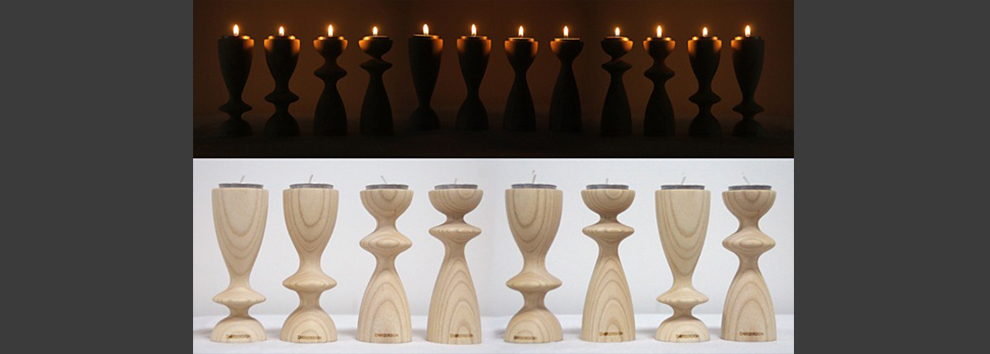
Zhang Fei: Natural wood and bamboo are both materials that I really like. These materials are natural, and each pattern and texture on them is unique in the world.
At the same time, they can also bring us a great touch. Through design, we can widely promote these traditional materials in daily life,
which has a great positive impact on the world's environmental protection and circular design.
We also believe that products made of this type of material are more appealing to users and have a great market demand,
so the original ecological design is worth promoting. We hope more people can join our ranks.
koeme: What is the biggest challenge encountered in work?
Zhang Fei: In the design and development of products, there will definitely be many production and technical obstacles,
and every work requires constant experimentation. The biggest challenge in work is encountering some problems that arise during the mass production process.
But what excites us the most is breaking through existing difficulties through different attempts. Trying is the source of many original design innovations,
and "trying" has become something we often do. Many joys come from here.
koeme: What is your work process like and do you enjoy it? What do you think is the most charming part of product design?
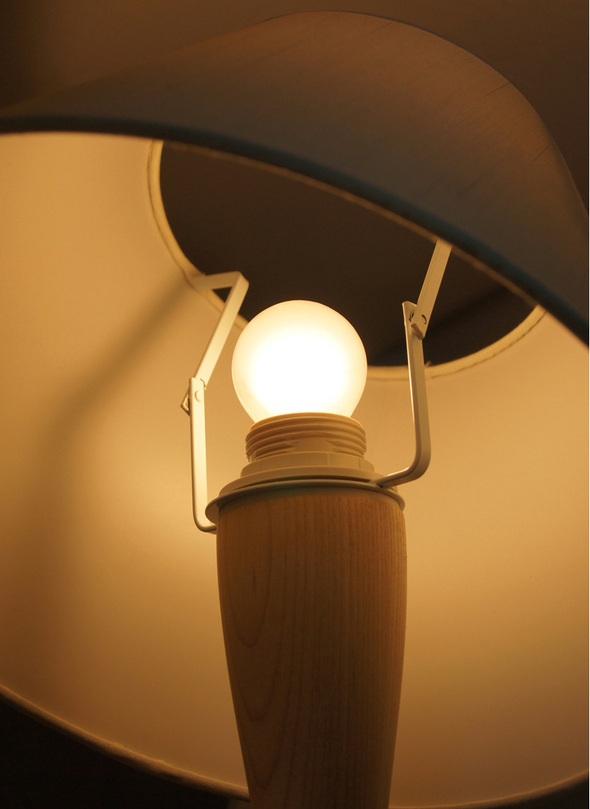
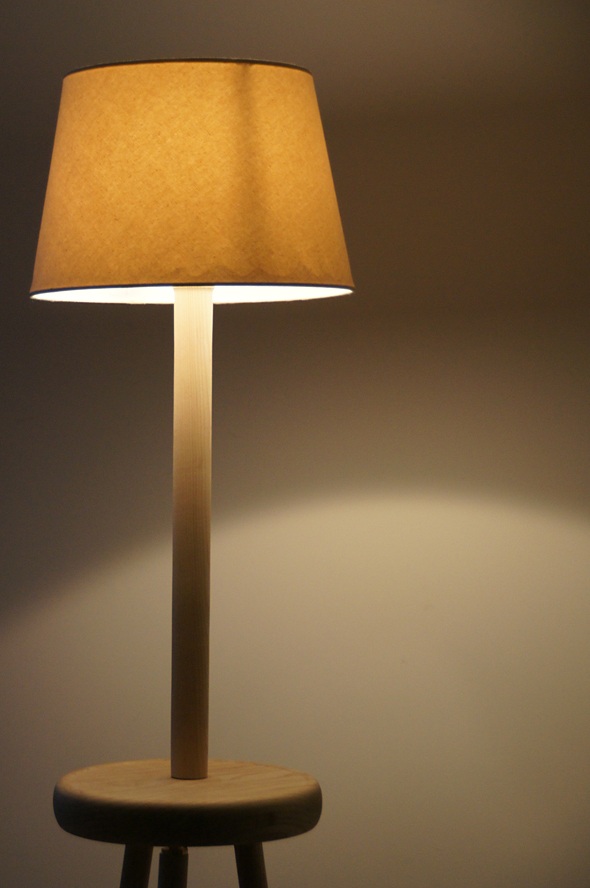
Zhang Fei: Design is a process, we love design, and what fascinates us the most is this process. When we were making the Y wooden lamp,
we drew a sketch and went to the wood processing factory for the master to make a sample. We found that the wood grain on it exceeded our imagination.
Then we came back and redesigned several curves, and asked the master to make a sample. There were some we liked and some we didn't like. Slowly,
we found the pattern of beautiful wood grain display. Then I went to many wood dealers and searched for imported and domestically produced wood for my master to test.
As a result, we found our favorite white wax wood (imported from the United States). The wood grain and feel of this wood are superb (for our product),
so naturally we consider it as the main material. And many consumers also like the texture and feel of this wood. Design is a process,
not just sitting in front of a computer to simulate scenes and materials like designing renderings for businesses in the past. Design is a process of experience and experimentation.
koeme: As a product designer, based on personal experience, what do you think is the most important thing for a product designer?
Zhang Fei: Adhere to your own viewpoint, always look at problems with your own eyes, and feel things with your own heart. This is a very important point as a designer.
koeme: What do you read on weekdays?
Zhang Fei: I read everything on a daily basis and have always been following the trends in product design.
Nowadays, people are curious about various fashion trends and curious about new things. My favorite experiences are still traveling and buying new products.
I will definitely buy and try out many good things myself, although some may not be of practical use to myself, I will still buy them.
koeme: How do you think designers should grow quickly?
Zhang Fei: Many students are intimidated by the low employment wages after graduating from industrial design and feel that studying industrial design has no future.
In school, I feel that the most important thing I do is not to teach design techniques or methods. I share the entire process of every product I have designed with my students,
mainly to inspire their passion for design. In the real world, employment is indeed quite poor, but I firmly believe that the future of design is still bright.
The benefit of doing so is that it has brought many aspirations to many students, which is where I as a teacher find satisfaction.
Last month, I was invited to give two lectures at the School of Art and Design, Zhejiang University of Technology.
The topic was "Dreams Shine into Reality", which was a summary of my own designs over the years and an encouragement for students.
koeme: What kind of brand do you expect to make from the original design?
Zhang Fei: The original design I expected was not for a brand with a super large production volume. I hope it adheres to design and quality,
and I don't want it to become famous or immediately recognized by a large number of consumers.
The establishment of a brand requires a large accumulation of good design and the test of time.
I will devote myself to it for the next few decades, designing and producing products with care, while also enjoying the process.
Koeme: How do you personally view the phenomenon of works being plagiarized and copied?
Zhang Fei: The phenomenon of design being copied is common in China, but I don't think it has reached a very scary level yet. In the future,
we will continue to design new products, use intellectual property to protect our brand, and also crack down on these plagiarists.
On the road to originality, we will definitely encounter various difficulties, but we will persevere.
koeme: July is another graduation season, do you have anything to say to the graduating students?
Also, if you were to recommend a domestic designer at the first moment, who would they be and why?
Zhang Fei: I would say to them, 'If you really enjoy design, please persevere. Difficulties are normal, and the process of overcoming them is your wealth.'
Both domestically and internationally, there are definitely many designers who are sticking to their own path.
If I recommend one, it's' Shi Daewoo '. He has also been sticking to his own path.